
Your thermostat says 72, but the house feels like 82. When your AC is blowing warm air or your air conditioner is blowing hot air, the problem may be small, or it may be the first sign of a bigger repair.
In Fresno, that gap matters fast. A struggling air conditioning system can turn a normal afternoon into a long, sticky evening, so it helps to know how to troubleshoot what to check before the heat settles in.
Key Takeaways
- Check thermostat settings first—ensure it’s on ‘Cool’ and fan is on ‘Auto,’ not ‘On,’ to avoid circulating room-temperature air.
- Replace a dirty air filter and clear blocked vents or returns, as poor airflow can freeze coils and stop cooling.
- Inspect the outdoor condenser unit for dirt, debris, or power issues; clean gently if needed, but call a pro for deeper problems.
- Watch for ice buildup, tripped breakers, or persistent warm air—shut off the system and schedule HVAC service to avoid bigger damage.
- Annual professional maintenance catches issues early and keeps your Fresno AC running efficiently through hot summers.
Why your AC is blowing warm air inside the house
Start with the easy stuff. Many warm-air calls come down to a setting change, weak airflow, or a power issue.
First, check the thermostat settings. It sounds obvious, but cooling systems get switched to “heat” or “fan” more often than you’d think. If the fan is set to “On” instead of “Auto,” the blower may keep moving room-temperature air even when the system isn’t actively cooling. That can feel like the AC has quit, even when it hasn’t.
Next, take a look at the filter. A dirty air filter restricts airflow, creating an airflow obstruction, and poor airflow makes it hard for the system to move cooled air through the house. In some cases, the evaporator coil in the indoor air handler gets too cold and starts to freeze. Then the unit can blow warm or barely cool air.
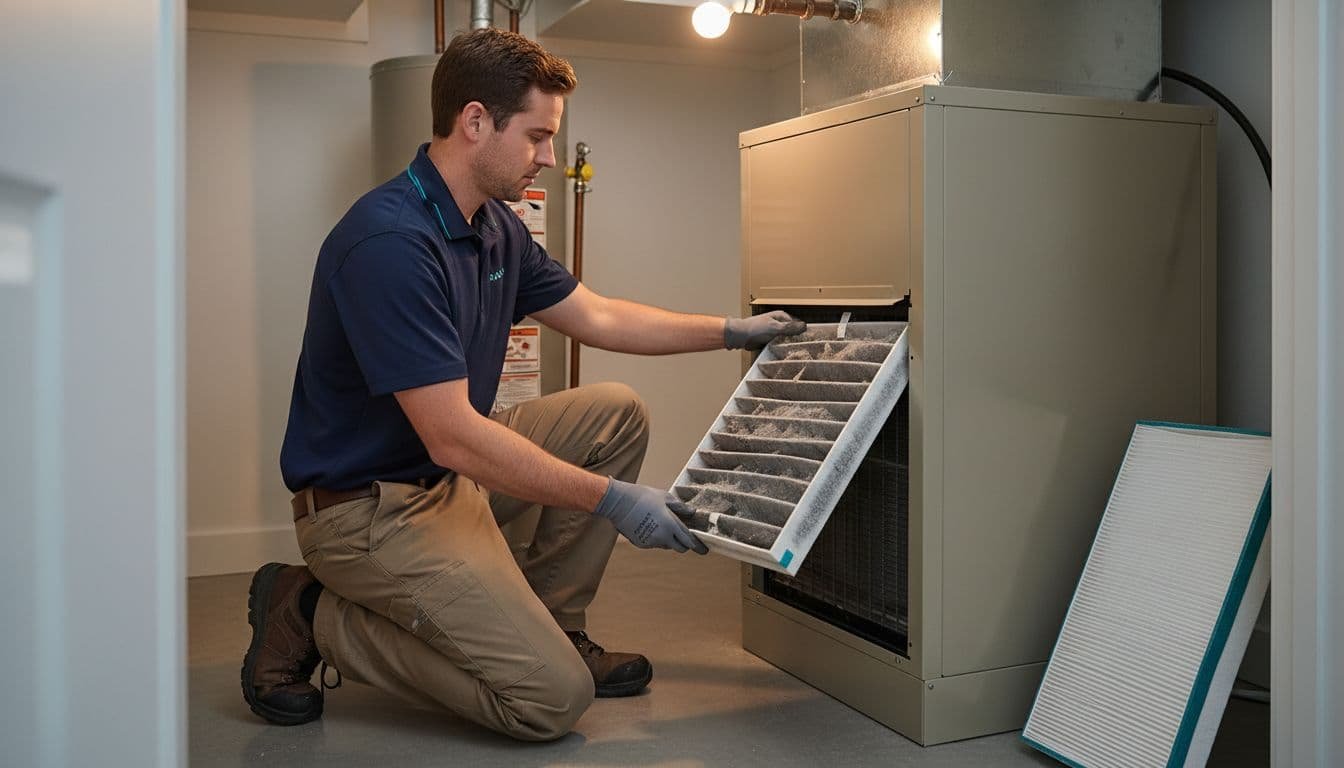
Also walk through the house and make sure supply air vents are open and return grilles aren’t blocked by furniture. Closed vents don’t save money. They can throw off airflow and make rooms feel hotter.
This quick table can help narrow it down:
| What you notice | Likely cause | What to do |
|---|---|---|
| Warm air comes and goes | Fan set to “On” | Switch fan to “Auto” |
| Weak airflow at vents | Dirty air filter or blocked air vents | Replace dirty air filter, clear air vents |
| Indoor unit runs, outdoor unit doesn’t | Tripped circuit breaker or power supply issue | Check the power supply, reset circuit breaker once, then call if it trips again |
If one of these fixes brings cold air back, great. If not, don’t keep dropping the thermostat. That only makes the system run longer, and sometimes it makes the problem worse.
Outdoor unit trouble can stop cooling fast
If the inside checks look fine, head outside. Your outdoor unit, the condenser that handles heat rejection for the entire system, is where a lot of AC repair calls begin.
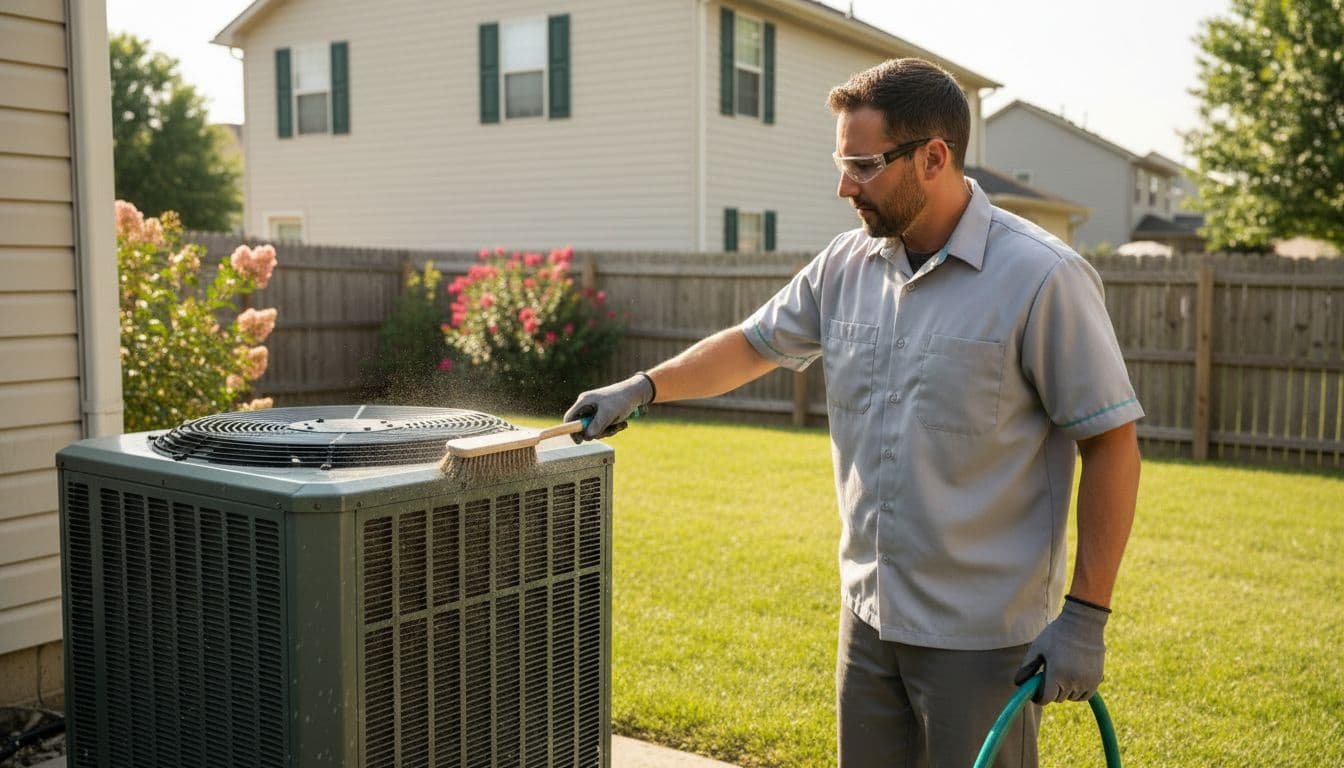
When the condenser coils are packed with dirt, grass, or cottonwood, the system can’t dump heat well. This impairs heat transfer, so trapped heat stays in the cycle, and the air coming from your vents feels warm or only mildly cool. In Fresno, where summer dust builds up fast, this is common.
Keep plants, leaves, and debris at least a couple of feet away from the outdoor unit. If the cabinet looks dirty, turn the system off before cleaning around it. A gentle rinse can help with surface dirt, but bent fins and deeper coil buildup are better left to an hvac technician.
Electrical problems are another big reason for warm air. A bad capacitor, contactor, or compressor can keep the outdoor unit from starting, potentially leading to compressor failure. In that case, the indoor blower may still run, which fools you into thinking the whole system is working.
If the indoor fan runs but the outdoor unit is silent, shut the system off and book service.
Watch for ice buildup, too. If you see frost on the refrigerant line or frozen coils near the indoor coil, turn the cooling off and let the fan run. Ice buildup usually points to restricted airflow or a refrigerant issue. Running a frozen system won’t cool the house faster. It often leads to more damage.
Frequently Asked Questions
Why is my AC blowing warm air?
Warm air often comes from simple issues like a thermostat set to ‘Heat’ or ‘Fan On,’ a dirty air filter restricting airflow, or blocked vents. Outdoor problems like dirty condenser coils or a silent compressor unit can also trap heat in the system. Start with basic checks before assuming a major failure.
What should I check first at home?
Verify thermostat settings, swap out the air filter if dirty, and ensure all vents and returns are open and unobstructed. Head outside to confirm the condenser unit is running and free of debris. If these don’t fix it, avoid running the system nonstop and call for service.
Can I clean my outdoor AC unit myself?
Yes, turn off power first and gently rinse surface dirt from condenser coils with a hose, keeping debris clear. Skip if fins are bent or buildup is heavy—those need a pro to avoid damage. In dusty Fresno summers, regular checks help but don’t replace tune-ups.
When should I call an HVAC technician?
Call right away for ice on coils or lines, repeatedly tripping breakers, strange noises or smells, or warm air persisting after basic checks. Low refrigerant, leaks, or failing parts like capacitors require pro diagnosis and repair. Same-day service prevents compressor failure on hot days.
Does annual maintenance really help?
Absolutely—tune-ups spot weak components, clean coils and drains, and boost efficiency before breakdowns hit. Fresno’s heat and dust accelerate wear, so pros catch issues early. It saves on emergency repairs and energy bills.
Low refrigerant and other HVAC issues need a pro
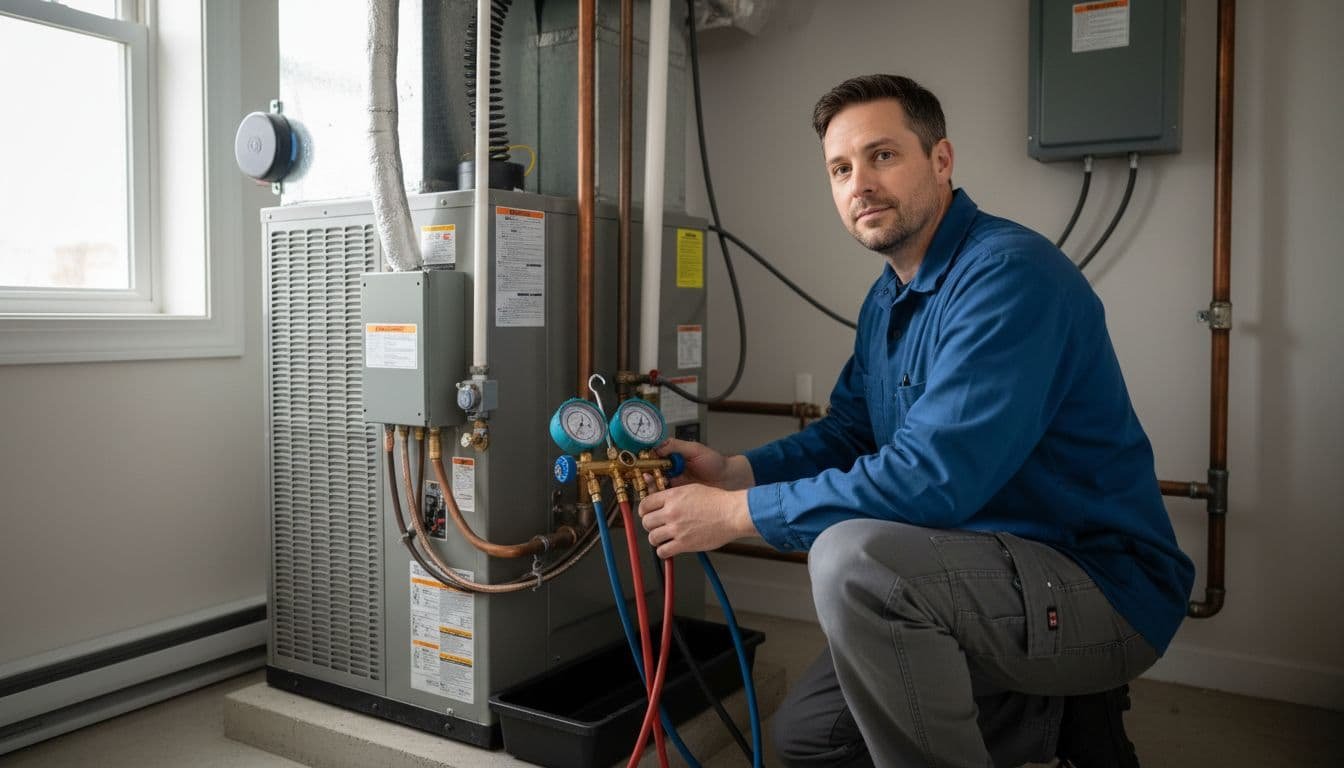
Some problems go past basic checks. Low refrigerant levels is one of them, and it almost always means there’s a refrigerant leak. Refrigerant doesn’t get “used up” like gas in a car. If levels are low, the system needs diagnosis and repair, not a simple top-off.
Common signs include warm air, ice on the lines, hissing, longer run times, and higher energy bills. If your AC is blowing warm air and you notice one of those at the same time, it’s smart to stop guessing and call for help.
Several other issues can land in the same bucket. Leaky ductwork can pull hot attic air into your system. A failing fan motor can reduce airflow. A clogged drain line can trigger the float switch. If your home uses one hvac system for both heating and cooling, year-round wear on the cooling cycle adds up in quiet ways.
Call for service the same day if you notice any of these:
- Ice on the indoor unit or copper line
- Breakers that trip again after a reset
- Buzzing, grinding, or burning smells
- Warm air that lasts more than 30 minutes after basic checks
Annual maintenance helps more than most homeowners expect. A professional tune-up for your hvac system can catch weak parts, clogged drains, and dirty coils before a hot-day breakdown puts you in a rush, while improving energy efficiency.
Warm air from your vents isn’t always a major failure, but it should never be ignored. The best first steps are simple: check the thermostat, replace the filter, open the vents, and look for signs the outdoor unit isn’t doing its job.
When the heat rises in Fresno, a slow response can turn a fixable issue into a bigger one. For expert HVAC and air conditioner repair, Call Now or Schedule Now.
