

Have you ever noticed your air conditioner kicking on and off every few minutes? That constant, rapid-fire pattern is a classic sign of a problem called AC short cycling. A healthy air conditioner should run for a solid 15-20 minutes at a time to cool your home effectively and pull out humidity. When it only runs for short bursts, usually less than 10 minutes, it's not just annoying—it’s a warning sign that something is seriously wrong.
What Is AC Short Cycling and Why Is It So Bad?
Think of it like trying to run a marathon by sprinting for 10 seconds, stopping, then sprinting again. You'd exhaust yourself, put incredible strain on your body, and never actually finish the race. That’s exactly what your AC is doing when it short cycles. This damaging pattern is a clear signal that your system is struggling.
Every time your AC compressor starts up, it draws a huge surge of electricity. A healthy system is built to handle this a few times an hour. But when short cycling forces it to start over and over again, it dramatically speeds up wear and tear on the compressor—the heart of your AC and its most expensive part. For anyone living in hot climates like Fresno, where our AC repair service is a lifeline, catching this problem early is absolutely critical.
To help you spot the issue, here's a quick rundown of the most common signs.
Short Cycling Symptoms At A Glance
| Symptom | What It Looks/Sounds Like | Why It's A Problem |
|---|---|---|
| Frequent On/Off Cycles | The system turns on, runs for a few minutes, then shuts off, only to repeat the process shortly after. | This is the defining symptom. It puts extreme wear on the compressor and wastes a tremendous amount of energy. |
| High Energy Bills | Your monthly cooling costs are suddenly much higher than usual, even without a major heatwave. | The constant startups are incredibly inefficient and can increase cooling costs by 20-30%. |
| Uneven Cooling | Some rooms feel chilly while others remain uncomfortably warm. | The system doesn't run long enough to circulate cool air throughout the entire house, creating hot and cold spots. |
| Clammy, Humid Air | The air feels cool but also damp and sticky, even when the AC has been running. | Dehumidification requires long run times. Short cycles cool the air without removing moisture, leaving your home feeling uncomfortable. |
If you’re noticing any of these issues, it’s a clear indicator that your air conditioner needs attention before a small problem becomes a catastrophic failure.
Why You Can’t Ignore Short Cycling
Ignoring short cycling is like putting a piece of tape over your car’s check engine light. The underlying issue won’t go away; it will only get worse and lead to a much bigger repair bill down the road. The constant on-off sequence not only fails to make your home comfortable but also triggers a cascade of other expensive problems.
Here are the biggest risks:
- Skyrocketing Energy Bills: That initial startup phase uses the most power. Repeating it over and over can easily spike your cooling costs by 20-30%.
- Premature System Failure: The intense strain on the compressor can cause it to burn out in just a few years, a far cry from its expected 10-15 year lifespan.
- Poor Dehumidification: Your AC needs a long, continuous cycle to effectively pull moisture from the air. Short cycles leave your home feeling cool but unpleasantly damp.
- Uneven Cooling: The system shuts down before it has a chance to distribute cool air everywhere, resulting in frustrating hot and cold spots in your home.
An AC that turns on and off too frequently is a clear cry for help. It’s working much harder than it should to do a fraction of the job, leading to wasted energy and eventual breakdown.
The Surprising Problem of an Oversized AC
It seems counterintuitive, but a very common cause of AC short cycling is a system that’s too big for the house. Many people assume “bigger is better” when it comes to HVAC, but that couldn’t be further from the truth. An oversized unit is like using a fire hose to water a single houseplant—it’s just too powerful.
It blasts so much cold air so quickly that it tricks the thermostat into thinking the job is done in just a few minutes. The system shuts down before it can complete a full, healthy cycle. This rapid cooling is the primary reason it can’t remove humidity properly and is a major cause of short cycling. In fact, some studies show that nearly half of all new AC units are sized incorrectly. Since the startup can draw up to three times more power than steady operation, an oversized unit is a recipe for inefficiency and premature failure. You can explore why system sizing is so critical on samsaircontrol.com to learn more about this common mistake.
Alright, you’ve figured out that your AC is short cycling. That’s the first step. Now, let’s dig into why it’s happening. The reasons your system is stuck in this destructive loop can range from simple things you can fix yourself to more serious mechanical problems. Nailing down the right cause is the key to getting your home comfortable again.
Think of your air conditioner as a living, breathing system for your house. For it to work right, it needs to pull in and push out air without any trouble. When something gets in the way of that breathing process, the system starts to struggle and will shut itself down to prevent a total breakdown.
Suffocating Your System: A Clogged Air Filter
More often than not, the culprit behind short cycling is something incredibly simple: a dirty air filter. Your filter is there to catch dust, pet dander, and all the other gunk floating in your air. But once it’s completely clogged, it’s like asking your AC to breathe through a thick wool blanket. The system simply can’t pull in enough warm air to do its job, which kicks off a dangerous chain reaction.
When airflow is choked off, the evaporator coil inside your unit can’t absorb heat properly. It gets incredibly cold, so cold that it can actually freeze over into a solid block of ice. This triggers a safety switch that immediately shuts down the compressor to stop it from destroying itself. After a few minutes, the ice thaws a bit, the system tries to kick back on, and the whole suffocating cycle starts all over again.
A dirty filter is the number one cause of short cycling, restricting airflow until the system overheats and shuts down. Here in Central California’s dusty valleys around Paso Robles, where our filter replacement service is a frequent request, we’ve seen filters get completely clogged in as little as 30 days. In fact, up to 70% of short cycling service calls we get are traced right back to a neglected filter. This simple oversight can cause your evaporator coils to freeze, spike your energy use by 15-25%, and make your compressor fail 2-3 times faster. You can see more on how filters affect AC performance on mauzy.com.
Do-It-Yourself Repair: Replace Your Air Filter
- Find Your Filter: It’s usually tucked into a slot right on your indoor air handler or behind a return air grille in a wall or ceiling.
- Inspect and Replace: Slide the old filter out. A quick test is to hold it up to a light. If you can’t see light passing through, it’s toast.
- Put in the New One: Slide the new filter in, making sure the airflow arrows printed on the side are pointing toward the furnace or air handler, not into your room.
A Faulty Thermostat Giving Bad Commands
Your thermostat is the brain of your entire HVAC system. It’s what tells your AC when to turn on and when to turn off. If that brain is getting bad information, it’s going to give bad commands, causing your system to short cycle even if the AC unit itself is perfectly fine.
Think about where your thermostat is located. Is it baking in direct sunlight? Is it next to a hot lamp or mounted on the wall right above a TV that kicks off a lot of heat? If so, the thermostat will think the room is way hotter than it really is and run the AC in short, ineffective bursts. On the flip side, if it’s too close to a supply vent, it gets a direct blast of cold air, tricking it into thinking the room cooled down instantly and shutting the system off way too soon. You can read our guide on Wi-Fi thermostats to see how modern smart controls can give you much better placement options and more accurate temperature readings.
A thermostat’s location is everything. If it gets a false temperature reading from a nearby heat or cold source, it will send all the wrong signals to your AC. That confusion is what triggers the short, inefficient cycles that define this problem.
Low Refrigerant From A Hidden Leak
If your filter is clean and your thermostat is in a good spot, the next thing to suspect is low refrigerant. Refrigerant is the lifeblood of your AC; it’s the special fluid that circulates through the coils to absorb heat from inside your house and dump it outside. This is a closed, pressurized system, so if the refrigerant level is low, it means one thing: you have a leak.
When refrigerant levels drop, the pressure inside the system plummets. This causes that same evaporator coil to get far too cold, leading to ice buildup. A low-pressure safety switch built into your AC will detect this dangerous pressure drop and shut down the compressor to save it from being destroyed. After a few minutes, the pressure builds back up slightly, the system tries to start again, and the cycle repeats. Finding and fixing a refrigerant leak isn’t a DIY job, as our refrigerant leak detection service in a city like Visalia requires specialized tools, EPA certification, and a trained eye.
Your Step-By-Step DIY Troubleshooting Guide
So, you’ve noticed your AC is short cycling. Don’t panic just yet. As experts with over 20 years of experience in Central California, we can tell you that many of the most common causes are things you can safely check—and even fix—yourself.
Before you pick up the phone, running through this checklist can often solve the problem, saving you both time and a service call fee. This simple decision tree will help you walk through the diagnostic process like a pro.
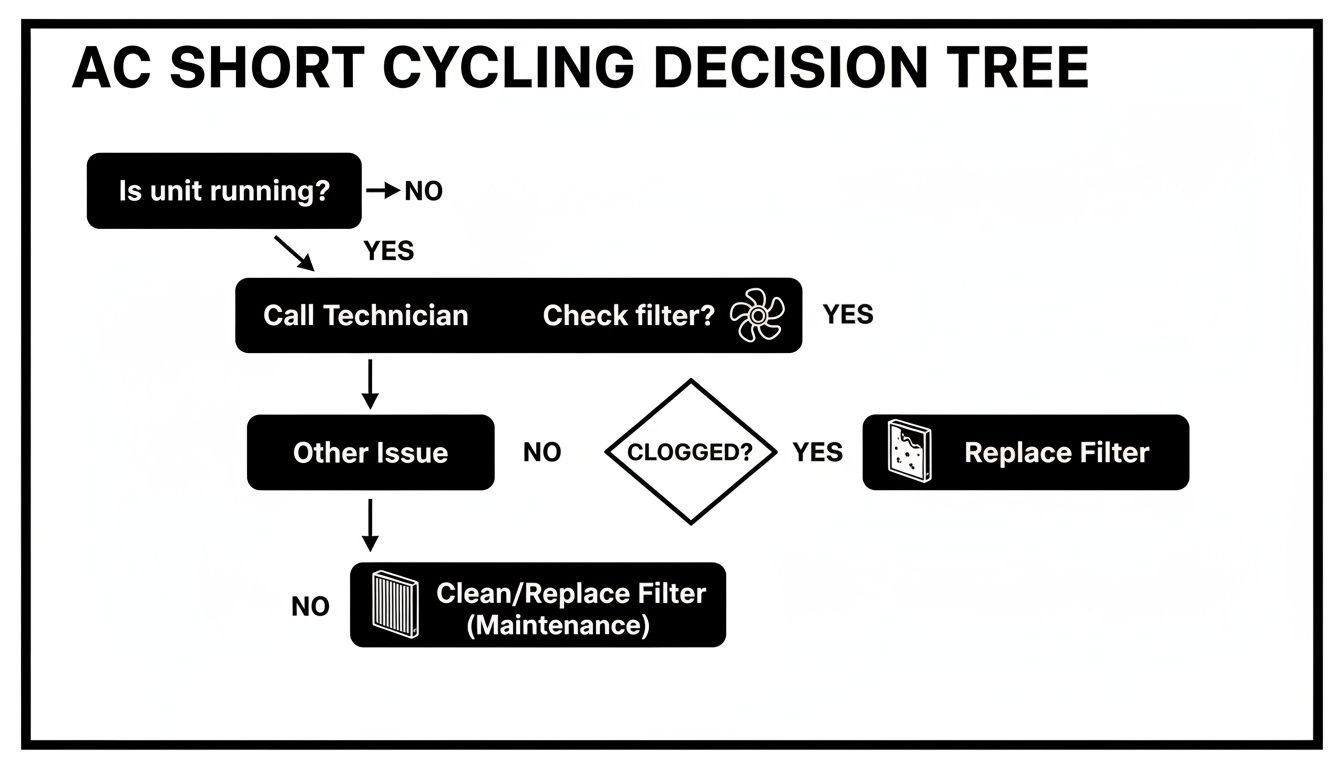
As you can see, the first place you should always look is the air filter. It’s the number one cause of short cycling and, thankfully, the easiest to fix.
1. Check The Air Filter
Your air filter is the most likely culprit, plain and simple. When it gets clogged with dust and debris, it literally suffocates your system. This restricted airflow makes your AC work too hard, causing it to overheat and shut down before its job is done.
Here’s what to do:
- Turn Off Your AC: For your safety, always turn the system completely off at your thermostat first.
- Locate and Remove the Filter: Find the filter access panel on your indoor air handler or behind the main return air grille. Slide out the old filter.
- Inspect It: Hold the filter up to a light. Can’t see much light passing through? It’s definitely clogged and needs to be replaced.
- Install the New Filter: Slide the fresh filter into the slot, making sure the airflow arrows on the filter’s frame are pointing toward the furnace or air handler, not away from it.
2. Inspect Your Vents and Registers
If a clean filter doesn’t stop the ac short cycling, the next step is to hunt down other airflow obstructions. Blocked or shut vents can cause the same kind of pressure backup as a dirty filter, tricking your system into an early shutdown.
Walk through your home and take a good look at every single supply and return air vent.
Things to Look For:
- Closed Louvers: Make sure all the vent louvers are fully open. It’s easy for them to get nudged shut during cleaning or by curious kids.
- Obstructions: Look for furniture, rugs, curtains, or even stray toys that might be blocking the vents and preventing air from circulating freely.
- Dust Buildup: A thick layer of dust on the vent grilles themselves can also slow down airflow. Give them a quick wipe-down if they look fuzzy.
Think of your ductwork as the lungs of your home. If even a few vents are blocked, it’s like trying to take a deep breath with a pinched nose—the whole system struggles to operate efficiently.
3. Examine the Outdoor Condenser Unit
Next, let’s head outside to your condenser unit. This big metal box is where your AC dumps all the heat it has pulled out of your house. If it can’t breathe, the system can’t get rid of that heat, causing it to quickly overheat and turn off to protect the compressor.
Here’s how to clear the way:
- Ensure Clearance: You need at least two feet of clear space all the way around the unit. Trim back any bushes, weeds, or tall grass that have crept too close.
- Remove Debris: Clear away any leaves, grass clippings, or dirt that has piled up around the base or settled on top of the unit.
- Gently Clean the Coils: After shutting off the power to the unit at the circuit breaker, you can use a regular garden hose to gently rinse dirt and dust off the metal fins. Use a light spray—never use a pressure washer, as the high pressure will bend the delicate fins and create a much bigger problem.
4. Assess Your Thermostat’s Location
Your thermostat is your AC’s command center. If it gets bad information, it will send bad commands. A poorly placed thermostat is a surprisingly common reason for short cycling.
Take a look at its surroundings. Is it sitting in a sunbeam, right next to a hot lamp, or mounted above a heat-radiating TV? Any of these can fool the thermostat into thinking the room is much hotter than it really is, forcing the AC to run in short, useless bursts. On the flip side, if it’s too close to a supply vent, it gets a direct blast of cold air and shuts off before the rest of the room has cooled down.
If you’ve gone through these DIY steps and your AC short cycling problem persists, it’s a strong signal that the root cause is more complex. For homeowners in the Bakersfield area facing a stubborn system, it’s time to call in a professional for our diagnostic service. The issue could be a refrigerant leak or an electrical fault that requires expert diagnosis.
When To Stop DIY And Call A Professional
While the troubleshooting steps we’ve covered can knock out many common causes of AC short cycling, it’s just as important to know when to put the tools down. Some AC problems aren’t just tricky—they’re downright dangerous. Going too far without the right training and equipment can lead to serious injury, costly damage to your system, or even create a fire hazard.
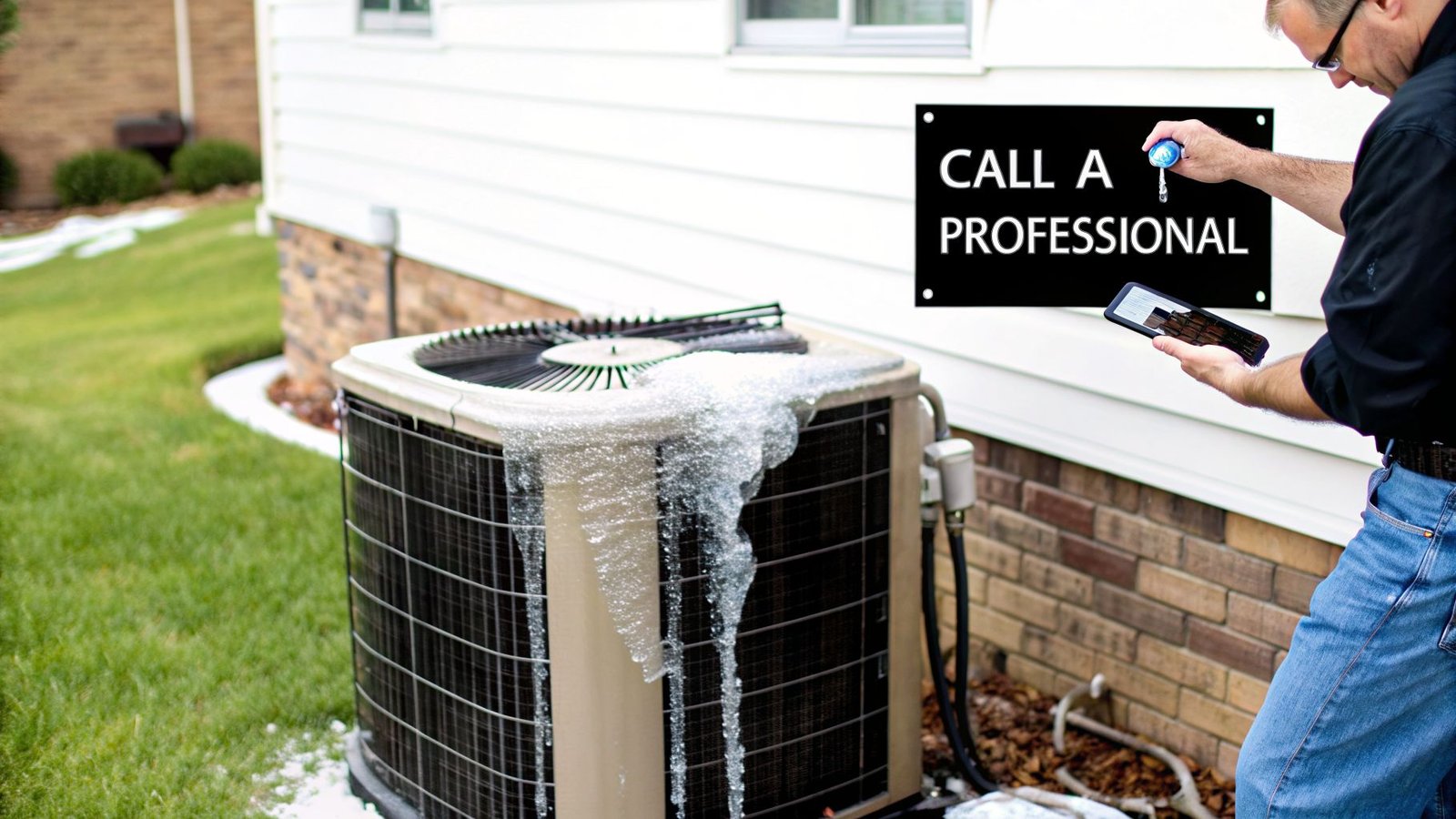
Knowing when to pick up the phone isn’t a sign of defeat; it’s the smartest, safest move a homeowner can make. If you’ve run through the basic checks and your air conditioner is still acting up, it’s time to call in a licensed technician. For homeowners in neighborhoods like Westchester in Bakersfield, professional help from our emergency AC repair service is the only way to guarantee the job is done right and everyone stays safe.
The DIY Red Flags You Can’t Ignore
Certain symptoms are immediate warnings that you’re dealing with a problem beyond a simple fix. If you see, hear, or smell any of the following, kill the power to your AC at the breaker box and call a professional right away.
- Burning Smells: Any scent of burning plastic, wiring, or a metallic odor points to a serious electrical failure. This could be anything from a short circuit to an overheating motor, and it’s a major fire risk.
- Loud Buzzing or Screeching: A loud, angry buzzing from your outdoor unit often means a failing capacitor or a seized-up compressor. A piercing, high-pitched screech can signal failing motor bearings that are about to give out completely.
- Significant Ice Buildup: A little frost on the lines that disappears after changing a filter is one thing. But a thick sheet of ice coating your coils or refrigerant lines—especially if it comes back quickly—is a classic sign of a refrigerant leak or a severe airflow blockage.
- Frequently Tripping Breakers: If the circuit breaker for your air conditioner trips over and over, stop resetting it. This is a clear warning of an electrical overload that needs an expert to diagnose safely.
Do-It-Yourself Repair No-Go Zones
Some parts of your HVAC system should only be touched by a certified professional. These areas involve high-voltage electricity and hazardous chemicals, presenting a real risk to both you and your equipment.
NEVER attempt to do the following yourself:
- Handle Refrigerants: Refrigerant is a high-pressure chemical regulated by the EPA. You need a certification to handle it legally and safely. Trying to “top off” your system or fix a leak can cause severe frostbite and release toxic chemicals.
- Work on High-Voltage Electrical Components: Your AC unit has parts like capacitors, contactors, and motors that carry high voltage. A capacitor can hold a lethal electrical charge even when the power is turned off. One wrong move here can be fatal.
- Open Sealed System Components: Never try to open the sealed refrigerant lines or the compressor. This will immediately release the system’s entire refrigerant charge, ruin the compressor, and void any existing warranties.
Calling a professional for these issues is simply the responsible choice. It protects you from harm, ensures the repair is done correctly and to code, and keeps a small problem from snowballing into a full system replacement. Your safety and your home’s integrity always come first.
What to Expect for Professional Repair Costs in 2026
After you’ve tried the basic troubleshooting steps, the big question on your mind is probably, “What’s this going to cost me?” We get it. Nobody likes surprise bills, which is why we believe in being upfront and transparent about our pricing.
The final cost for a professional repair in Central California will depend on what’s actually broken, how complicated the fix is, and if you need us to come out after hours. Labor rates can also shift a bit depending on your specific location, as our Fresno AC repair service has shown. Knowing these factors ahead of time helps you feel confident in your decision.
Estimated Repair Costs For AC Short Cycling Issues (2026)
To give you a clearer picture, we’ve put together this table of common repairs for short cycling. Think of it as a ballpark estimate to help you budget. The final price can change based on your AC’s specific make and model, but this is a great starting point.
| Service / Repair Type | Estimated Cost Range | Typical Time To Complete |
|---|---|---|
| Thermostat Replacement Service | $150 – $400 | 1 Hour |
| Capacitor Replacement Service | $175 – $450 | Under 1 Hour |
| Refrigerant Leak Detection & Repair Service | $450 – $1,600+ | 2 – 5+ Hours |
| Refrigerant Recharge Service (After Leak Repair) | $250 – $750 | 1 – 2 Hours |
| Frozen Coil Thaw & Cleaning Service | $200 – $600 | 1 – 3 Hours |
This is a perfect example of what you’re paying for with a professional service. It’s not just the part itself—it’s the technician’s years of experience, the right diagnostic tools, and the guarantee that the job is done safely and correctly the first time.
Safe DIY Repair: Checking Thermostat Wires
While most AC repairs are best left to a pro, there’s one simple DIY repair you might feel comfortable tackling: checking for a loose thermostat wire. This can sometimes send confusing signals to your AC, causing it to short cycle.
How to Check Your Thermostat Wires:
- Kill the Power: Your first and most important step. Head to your circuit breaker box and turn off the power to your entire HVAC system.
- Pop Off the Faceplate: Most modern thermostat covers just snap off the wall plate. Be gentle.
- Inspect the Wires: You’ll see several small, color-coded wires connected to screw terminals. Do any of them look loose or disconnected?
- Tighten Gently: If you spot a loose wire, grab a small screwdriver and carefully tighten the terminal screw until it’s snug. Don’t go overboard and strip the screw.
- Put It Back and Test: Snap the cover back on, flip the power back on at the breaker, and see if your AC runs normally.
A Word of Caution: This is as far as you should go with DIY electrical work. If the wires look burnt or corroded, or if this doesn’t solve the problem, that’s your cue to stop and call us for our expert electrical repair service in the Fresno area.
Preventing Future Problems With Proactive Maintenance
When it comes to a frustrating issue like AC short cycling, the old saying holds true: an ounce of prevention is worth a pound of cure. Rather than waiting for a costly breakdown in the middle of a heatwave, a proactive approach keeps your system healthy from the start. Think of it as a routine wellness check for the hardest-working appliance in your home.
A professional tune-up is a complete, top-to-bottom inspection that’s designed to spot the exact problems that cause short cycling. For homeowners sweating it out in a hot climate like Paso Robles, getting our AC tune-up service before the summer heat really kicks in is an absolute must.
What a Professional Tune-Up Includes
A real maintenance visit from a certified technician is far more than a quick glance. It’s a detailed service designed to tackle all the common points of failure before they can shut you down.
- Cleaning Indoor and Outdoor Coils: Our technicians will thoroughly remove the layers of dirt and grime that smother your coils. Clean coils transfer heat properly, which is crucial for preventing overheating and constant shutdowns.
- Verifying Refrigerant Levels: We’ll check your system’s refrigerant charge to make sure it’s at the manufacturer’s specification. Correcting a low charge prevents the pressure drops that cause frozen coils and short cycling.
- Testing Electrical Connections: Every capacitor, contactor, and wire gets inspected, reviewed, and tightened. This simple step heads off the electrical gremlins that cause your AC to turn on and off erratically.
- Clearing the Condensate Drain Line: We’ll flush the drain line to clear out the algae and sludge that builds up over time. This prevents a clog from triggering the float switch and shutting down your system when you least expect it.
Proactive maintenance is your best defense against short cycling. It directly addresses the most common causes—dirty coils, low refrigerant, and faulty electrical parts—before they can cause a system failure.
DIY Maintenance You Can Do
While nothing beats a professional tune-up, there’s one incredibly important job you can do yourself to help prevent short cycling: keeping your outdoor unit clear of debris.
- Turn Off the Power: Safety first, always. Go to your circuit breaker and shut off the power to the outdoor condenser unit.
- Clear the Area: Trim back any bushes, weeds, or tall grass so there’s at least two feet of clearance all the way around the unit. Rake away any leaves, grass clippings, or other debris piled up against the sides.
- Gently Rinse the Coils: Using a regular garden hose on a gentle spray setting, rinse the outside of the unit from top to bottom. This washes away the dust and pollen caked on the fins, helping it breathe and release heat more easily. Never use a pressure washer—it’s too powerful and will bend the delicate metal fins, causing serious damage.
Combining this simple task with an annual professional service call is the surest way to extend your system’s lifespan and avoid the headache of an unexpected breakdown. You can learn more about our professional AC maintenance plans and see how they are built to save you money and keep your system running reliably for years to come.
Frequently Asked Questions About AC Short Cycling
Even after a little troubleshooting, you probably still have some specific questions about AC short cycling. That’s completely normal. We’ve put together the most common ones our technicians hear from homeowners across Central California to give you clear, no-nonsense answers.
How Long Should My AC Run In One Cycle?
On a hot day here in the valley, a healthy, properly-sized air conditioner should run for about 15 to 20 minutes at a time. You can expect it to kick on like this two or three times an hour. This run time is the sweet spot—it’s long enough to cool the air and pull that sticky humidity out.
If you notice your AC is shutting off in under 10 minutes, that’s the classic sign of short cycling. Those quick, choppy cycles are incredibly hard on your system’s compressor and are the reason your home still feels clammy even when the AC is running.
Can An Oversized AC Really Be A Bad Thing?
Absolutely. It’s one of the biggest myths in HVAC that a bigger air conditioner is always better. In reality, an oversized unit is a primary cause of short cycling. It works too well, blasting so much cold air so fast that it tricks the thermostat into thinking the job is done long before a full, healthy cycle is complete.
While the room might feel cool for a moment, an oversized AC never runs long enough to pull moisture out of the air, resulting in that cool but sticky feeling. This constant starting and stopping also dramatically spikes your energy use and can lead to premature compressor failure, a very expensive repair. Our AC installation service in Bakersfield always includes a proper load calculation to prevent this.
Is It Safe To Run My AC If It Is Short Cycling?
Continuing to run an AC that’s short cycling is a risky move. It might give you some temporary relief from the heat, but you’re putting immense strain on the compressor—the heart and most expensive part of your entire system. Every short cycle is another high-stress startup that accelerates wear and tear, moving you closer to a total breakdown.
Beyond the damage, it makes your energy bills skyrocket. If you notice your system is short cycling, the safest bet is to turn it off and check the easy things, like the air filter. If that doesn’t fix it, calling a professional for our AC repair service in a community like Westchester or Bakersfield is the best way to prevent a small problem from turning into a catastrophic one.
Will A Smart Thermostat Fix My Short Cycling Problem?
Only if a bad thermostat was the problem to begin with. If your short cycling is caused by a faulty or poorly placed old thermostat, then yes, a new smart one can fix it.
But if the real culprit is a clogged filter, an oversized unit, or a refrigerant leak, a new thermostat won’t solve the mechanical issue. That said, a smart thermostat is still a great tool. It gives you advanced control and detailed energy data, which can help you spot irregularities like short cycling much faster in the future.
Why is fixing a refrigerant leak so expensive?
It’s a multi-step, detailed process that requires certified technicians. First, a technician has to use specialized tools like electronic sniffers to find the exact source of the leak, which can take a lot of time. Once the leak is patched, the system has to be recharged with refrigerant, a highly regulated material that’s costly to handle and purchase. Our refrigerant leak repair service in Fresno follows all EPA guidelines for safety and environmental protection.
If you’ve tried the DIY checks and your air conditioner is still struggling, it’s time to call in the experts. Monarch Home Services offers 24/7 emergency repair to get your system back online quickly and safely. Our certified technicians have the tools and experience to diagnose the true cause of your AC short cycling and provide a lasting solution. Schedule your service today at https://monarchhomeexperts.com.
