

When the AC quits on a July afternoon in Bakersfield, the house heats up fast. The thermostat says one thing, the vents deliver another, and everyone starts asking the same question: should this have been serviced sooner?
In Central California, that question matters more than it does in milder places. A system in Fresno, Visalia, or Paso Robles does not get an easy season. It runs hard, it pulls in dust, and it often keeps going day after day without much of a break. That is why how often to service air conditioner equipment is not just a maintenance question. It is a comfort question, a budget question, and sometimes a same-day repair question.
Your Air Conditioner's Lifeline in the Central Valley Heat
A July call in Bakersfield usually starts the same way. The system still turns on, but the house will not cool down, one bedroom is warm, airflow feels weak, and the unit has been running for hours. By the time that happens, the problem has often been building for weeks.
That is how AC trouble shows up in the Central Valley. Long run times, high outdoor temperatures, and constant dust expose the small issues that mild weather lets slide. A dirty condenser coil, a restricted filter, low airflow, or a loose electrical connection can stay hidden until the first serious heat wave pushes the system past its margin.

For Central California homeowners, regular service is less about checking a box and more about controlling cost. A neglected unit usually does not fail all at once. It loses efficiency first, runs longer to do the same job, and puts more wear on parts during the hottest months of the year. In Fresno, Visalia, and Bakersfield, those extra run hours show up on the power bill fast.
The Stakes in Fresno and Bakersfield
In this part of California, AC is basic infrastructure during summer. If it goes down in a heat spell, the issue is not limited to comfort. Sleep gets worse, indoor temperatures climb fast in the afternoon, and homeowners often end up approving repairs under pressure because they cannot wait several days to decide.
I see the same trade-off every season. Skip maintenance, save a little now, then risk higher electric bills, after-hours service calls, and repairs that could have been handled earlier for less. Stay on top of service, and the system usually runs steadier, cools more evenly, and gives you more time to plan for bigger decisions before a breakdown forces them.
If your AC runs hard day after day, maintenance should be treated like budget protection. In the Central Valley heat, small problems rarely stay small for long.
The Gold Standard for AC Service Frequency
For most Central California homes, the practical standard is simple. Service the AC twice a year, once in spring and once in fall, especially in hotter areas where the system works hard for extended periods.
That recommendation is backed by HVAC guidance for hot climates. Professional HVAC servicing is recommended twice annually, once in spring and once in fall, because dust and debris that build up over about six months can reduce heat transfer efficiency by up to 20-30% and increase energy consumption by 15% or more, as noted in this HVAC service frequency guide.
AC maintenance: A comparison to car service
A central AC system does not usually fail all at once without warning. More often, performance slips first. The unit runs longer. Cooling gets uneven. Parts work harder than they should.
That is why scheduled service works. It catches the issues that do not look urgent yet.
A good baseline looks like this:
- Spring service in Fresno: Clean, inspect, and test the cooling side before heavy summer demand starts.
- Fall service in Visalia: Check wear after the long cooling season and address anything that heat exposed.
- Filter attention during the season: Homeowners handle this between professional visits.
Once a year versus twice a year
If you live in a milder area and use the system lightly, annual service may be enough. If you live in Bakersfield, run the AC hard, have pets, deal with dust, or own an older system, twice-yearly service is the safer schedule.
What does not work is waiting until the unit starts acting up. By then, the problem has usually moved from maintenance to repair.
Customizing Your AC Tune-Up Schedule for California Life
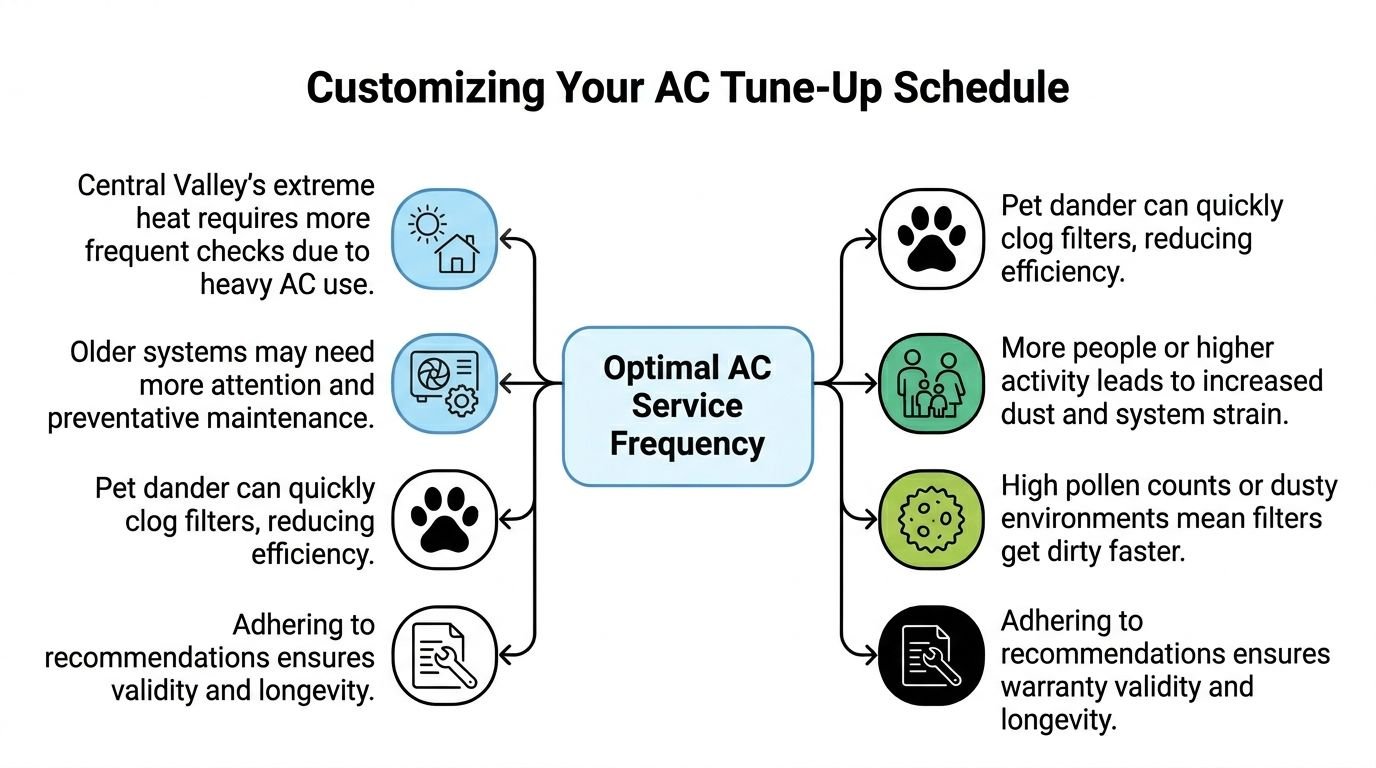
Generic advice misses what daily life looks like in the Central Valley. A home near open fields outside Bakersfield does not load a filter the same way a home in a less dusty neighborhood does. A system in Fresno that runs deep into the evening does not age the same way one in a cooler microclimate.
While generic advice often suggests biannual service for hot climates, it tends to overlook local conditions. For Central California areas like Bakersfield and Fresno, agricultural dust and extreme heat over 100°F can accelerate debris buildup much faster, according to this region-focused AC service discussion.
Homes that usually need more frequent attention
Some homes should not rely on the same schedule as everyone else.
- Dust-heavy Bakersfield neighborhoods: Wind, nearby construction, and agricultural activity can dirty the outdoor unit and filter faster.
- High-use Fresno homes: If the AC runs most of the day, small efficiency losses show up faster.
- Pet households in Visalia: Hair and dander load filters quicker and can affect airflow.
- Older systems in Paso Robles: Older equipment benefits from closer monitoring because wear tends to show up in stages.
A practical decision guide
Use this framework when deciding how often to service air conditioner equipment in your home.
| Home condition | Better schedule |
|---|---|
| Mild use, cleaner air, newer system in Paso Robles | Annual professional service may be workable |
| Heavy summer runtime in Fresno | Twice yearly is the safer baseline |
| Dusty area, pets, older equipment in Bakersfield | Twice yearly, plus closer filter checks |
| Repeated airflow issues or past breakdowns in Visalia | Increase inspections and stop waiting for seasonal visits |
Warning signs that annual service may not be enough
If any of these keep happening, your home may need more frequent maintenance:
- Filters get dirty unusually fast
- The outdoor unit collects debris quickly
- Cooling drops off before peak summer is over
- You keep resetting the thermostat to compensate
- You have already had one service issue tied to dirt, airflow, or heat stress
Key takeaway: In Central California, the right answer is not always “once a year” or “twice a year.” The right answer depends on how hard the system works and how much dust and debris your home deals with between visits.
Warning Signs Your Air Conditioner Needs Service Now
Planning helps, but some problems should not wait for the next tune-up. When an AC in Paso Robles or Fresno starts showing distress, fast action can prevent a bigger repair.

What to notice inside the house
Pay attention to what you hear, feel, and smell.
- Weak airflow in a Visalia hallway: Often points to a filter issue, blower problem, or airflow restriction.
- Warm air from vents in Fresno: Could mean the system is running without effectively cooling.
- Musty or sharp odors in a Bakersfield bedroom: Can signal drain issues, buildup, or electrical trouble.
- Frequent cycling in Paso Robles: The system may be struggling to satisfy the thermostat.
What to check outside
A quick visual check can tell you a lot.
- Water around the unit
- Ice on refrigerant lines or visible components
- Unusual vibration or harsh noise
- Debris packed around the condenser
If you hear grinding or squealing during a hot afternoon, shut the unit off and get it checked. Running a struggling system longer can turn a manageable repair into a major one.
For homeowners who want a deeper breakdown of common failure causes, this page on why an AC stops working is a useful next step.
Tip: If the system is blowing warm air and also making noise, do not keep testing it by turning it on and off. That usually adds more wear without solving anything.
DIY AC Maintenance vs When to Call a Pro in Fresno
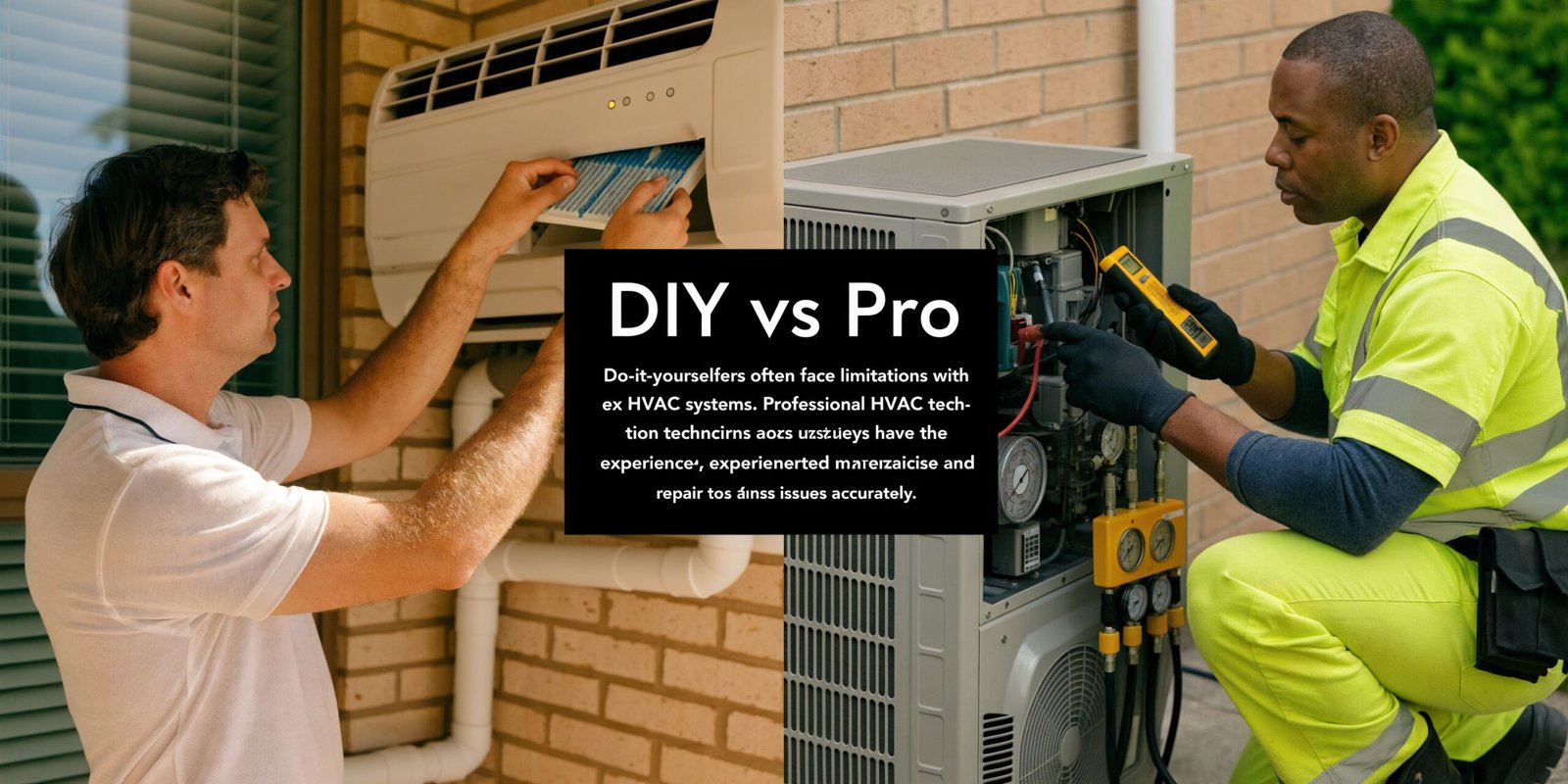
Homeowners can do a lot to help an AC run better between service visits. They just need to stay on the safe side of the line.
The most important DIY task is filter maintenance. Homeowners should replace or clean air filters every 1-3 months. A clogged filter can restrict airflow by 20-50%, which can freeze the evaporator coil and increase energy use by 5-15%, according to Trane’s AC maintenance guidance. In dusty Central California homes, filters may need checking bi-weekly.
Safe DIY tasks for homeowners in Fresno
These are worthwhile, low-risk jobs for most homeowners.
Check and replace the filter
Turn the system off at the thermostat. Remove the filter. Match the airflow arrow on the new filter to the direction of airflow in the return. Slide it in fully and make sure the access panel closes properly.Clear debris around the outdoor unit
Shut off power at the disconnect if you are doing more than light cleanup. Remove leaves, weeds, and loose debris around the condenser. Keep the area open so the unit can move air properly.Inspect the condensate drain area
Look for standing water near the indoor unit. If the drain line opening is accessible and clearly clogged with surface buildup, carefully clear only what you can reach without taking equipment apart.Check supply vents and returns
Make sure furniture, rugs, or curtains are not blocking airflow. A system cannot cool properly if the air path is choked inside the house.
What does not belong in DIY repair
Do not open electrical compartments. Do not handle refrigerant. Do not force frozen parts to thaw with tools or heat. Do not wash indoor coils aggressively without knowing the unit design.
Those are the jobs where good intentions often create bigger repairs.
DIY Maintenance vs. Professional Service Tasks
| Task | DIY (Homeowner) | Professional (Monarch Technician) |
|---|---|---|
| Replace return air filter in Fresno | Yes | Yes |
| Clear leaves and loose debris around outdoor unit in Visalia | Yes | Yes |
| Check visible drain line area in Bakersfield | Yes | Yes |
| Clean evaporator and condenser coils in Paso Robles | No | Yes |
| Check refrigerant level in Fresno | No | Yes |
| Test capacitors, wiring, and electrical connections in Visalia | No | Yes |
| Diagnose ice buildup or repeated short cycling in Bakersfield | No | Yes |
| Repair blower motor, compressor, or controls in Paso Robles | No | Yes |
A simple rule for homeowners
If the task involves filters, visibility, or basic cleanup, it is usually a homeowner job. If it involves electricity, refrigerant, internal components, or diagnosis, call a licensed technician.
That line matters because DIY maintenance can prevent problems, but DIY repair can turn one problem into three.
The ROI of a Professional Tune-Up in Central California
A professional tune-up pays off in three places. Lower operating cost, fewer emergency calls, and a better chance of getting full life from the equipment.
For homeowners trying to decide whether preventive maintenance is worth it, one useful comparison is cost. A typical annual service cost of $80–$150 compared with a single emergency repair call of $200–$500+ can make the decision easier. The same analysis notes that a 10-15% reduction in summer cooling bills can equal $150-$300 per season, according to this ROI discussion on preventive AC maintenance.
What happens during a professional tune-up in Bakersfield
A proper service visit should include inspection, cleaning, testing, and adjustment. In real terms, that often means:
- Coil cleaning
- Refrigerant check
- Electrical inspection
- Thermostat verification
- Drain and airflow review
- General wear check on motors and moving parts
Each of those tasks protects something different. Coil cleaning supports heat transfer. Electrical inspection catches loose or failing connections. Refrigerant and airflow checks help the system cool without overworking the compressor.
Why the math works in Fresno
Maintenance is cheaper when it stays preventive. Repair gets expensive when the system fails in peak heat and the home cannot wait.
Consider the trade-off in plain terms:
| Decision | Likely result |
|---|---|
| Skip maintenance in Visalia | Greater chance of reduced performance and surprise repairs |
| Service before summer in Fresno | Better chance of steady cooling and fewer peak-season breakdowns |
| Wait for obvious failure in Bakersfield | Higher stress, higher repair risk, less scheduling flexibility |
Key takeaway: The financial return is not just about utility bills. It is also about avoiding emergency pricing pressure, preserving equipment life, and reducing the odds of replacing a system sooner than expected.
Monarch's Plan for Year-Round Comfort and Peace of Mind
A Central Valley homeowner usually has two choices by July. Service the system on your schedule in spring, or deal with a problem when the house is heating up, the unit is running nonstop, and appointment windows are tight.
The better plan is steady, boring, documented maintenance. In this climate, that pays off. Dust loads up filters and coils fast, long cooling seasons add wear, and small airflow or electrical issues have more time to turn into expensive repairs. Regular service also helps support warranty records and gives you a cleaner service history if a major repair question comes up later.
A workable maintenance routine for Visalia and Bakersfield
A practical schedule for Central California homes looks like this:
- Spring service before sustained heat: Get the system checked before daily high temperatures push it into constant operation.
- Mid-season filter check in Fresno and other dusty areas: Replace or inspect filters more often if the home sits near open land, construction, or busy roads.
- End-of-season review in Visalia or Bakersfield: Catch worn parts, drainage issues, and dirt buildup after a long summer.
- Extra attention for high-use homes: Homes with pets, allergies, older ductwork, or uneven cooling often need a tighter schedule than the calendar suggests.
Homeowners who want those visits mapped out in advance can review Monarch Home Services maintenance agreements to see what is included in a recurring service plan.
Why a service plan makes financial sense here
In milder climates, some owners can get away with stretching maintenance. Central California is less forgiving.
A neglected unit may still cool for a while, but it usually does it with more strain, higher power use, and a higher chance of failure during peak heat. A scheduled plan helps spread out costs, reduces the odds of emergency calls, and gives the equipment a better shot at reaching a full service life.
That is what year-round comfort usually looks like in Fresno, Bakersfield, and Visalia. Fewer surprises, better timing, and fewer repair decisions made under pressure.
Frequently Asked Questions About AC Service
Does a brand-new AC in Fresno need service in the first year
Yes. New equipment still needs inspection, filter attention, and seasonal checks. Early service also helps protect warranty documentation.
What happens if I skip a year of maintenance in Bakersfield
The system may still run, but it is more likely to lose efficiency, collect dirt, and develop problems that show up during extreme heat. Skipping maintenance usually saves money only until something fails.
Is service different for a heat pump in Visalia
The core idea is the same. A heat pump still needs regular professional attention and homeowner filter care. Because it handles both heating and cooling, consistent maintenance matters even more.
How often should I check my air filter in Paso Robles
Check it regularly during heavy use, and check it more often if you have pets, dust, or allergy concerns. If the home gets dusty fast, do not wait for the calendar.
Can I clean the outdoor unit myself in Fresno
You can remove loose debris around it and keep the area clear. Deep cleaning, coil cleaning, electrical testing, and internal repair should be left to a professional.
If your AC in Bakersfield, Fresno, Visalia, or Paso Robles is due for service, Monarch Home Services can help you schedule maintenance, inspect warning signs, and keep your system ready for the next stretch of Central California heat.
